

 Cyprus is famous for its cultural heritage. Lefkaritika is the characteric type of embroidery art in Cyprus, dating back to at least the fourteenth century It is the evolution of an older type, called „asproploumia„. The main stitches of „asproploumia“ survived in the newest type of Lefkaritika. New stitches and motifs are added depending on the skill and creativity of the embroideress. Lefkaritika soon reached a higher level of quality, because of the competition between women, since they were considered to be a center piece of a dowry. Each girl had to have an extended collection ready for exhibition on her wedding day. This way a lot of the traditional elements were past from mother to daughter. Many women practiced embroidery as a profession as well. Women embroideresses in Pano Lefkara, called „ploumarisses“ organised their production from home. Men from Lefkara, called „kentitarides“, were merchants and they traveled across Europe and Scandinavia. According to tradition, in 15th century Leonardo da Vinci visited Cyprus and took a Lefkara Lace back to Italy with him, which today decorates Duomo Cathedral in Milan.
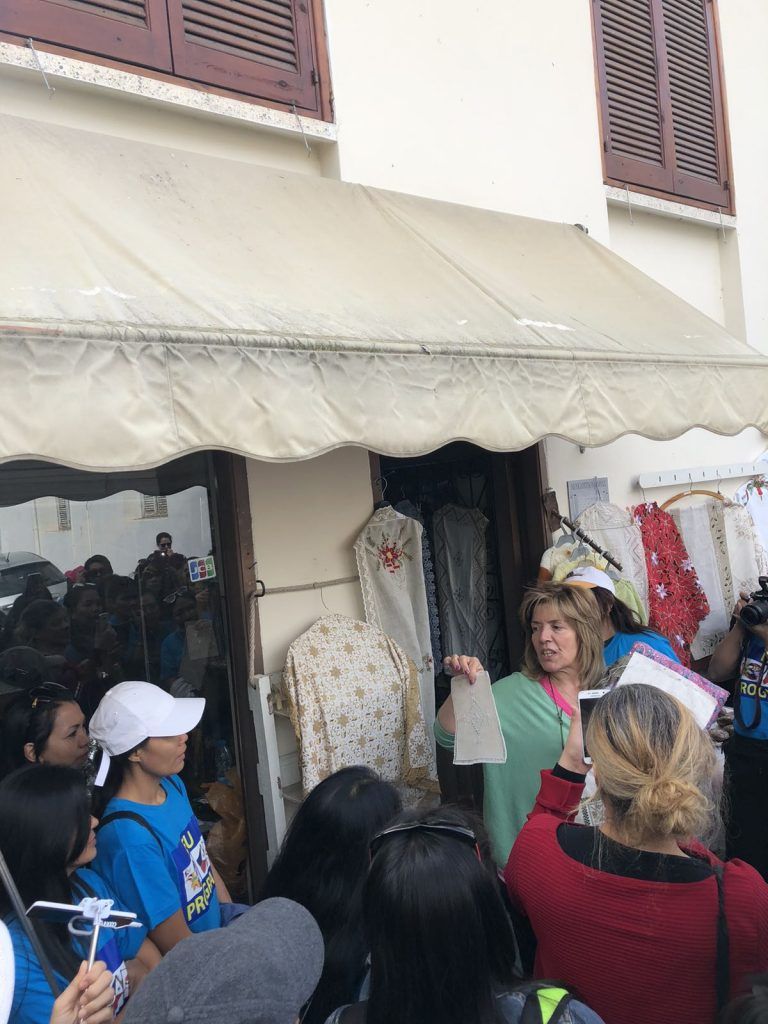
Since many of the women were interested in embroytery, one group of women from Philippines decided to learn how Lefkara Lace is made and the history behind it.
The women came in contact with the council of Lefkara village and arranged for an appointment with a member of a city council, a lady who also herself knows and creates Lefkara lace. They arranged for a meeting during our visit to learn more about this tradition.
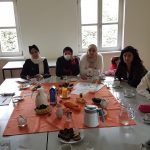
After the visit sessions were held to summarize the learning outcomes of the visit and the lessons learn from the entire process.
This was a rewarding activity for the women with a positive feedback from both locals and third country nationals. Locals were excited that through the project InCommon the Lefkara Lace tradition could be promoted. The ladies were excited to learn about this craft and to come in contact with the women that exercise the craft.
This type of visits are applicable to all stages of the Cultural Citizenship Scale but in this case is conected with levels 3 and 4. The women themselves get the information, plan and organise the activitity in a team work.

